
1. Start with supplier–project fit
A reliable supplier for a wholesale core range may not be the right fit for a hotel room schedule or a design-led private-label launch. Define the sales channel, application, destination market, expected quantities and required level of customization before building the shortlist.
- Wholesale, retail, private-label or project channel
- Mirror shapes, lighting styles and storage requirements
- Destination market and installation context
- Sample, quotation or project-development objective
2. Send the same brief to every shortlisted supplier
Comparable responses require comparable inputs. Use the same target dimensions, lighting intent, controls, anti-fog preference, electrical assumptions, branding and packaging scope. Ask each supplier to identify open decisions rather than filling gaps with assumptions.
3. Evaluate engineering and change control
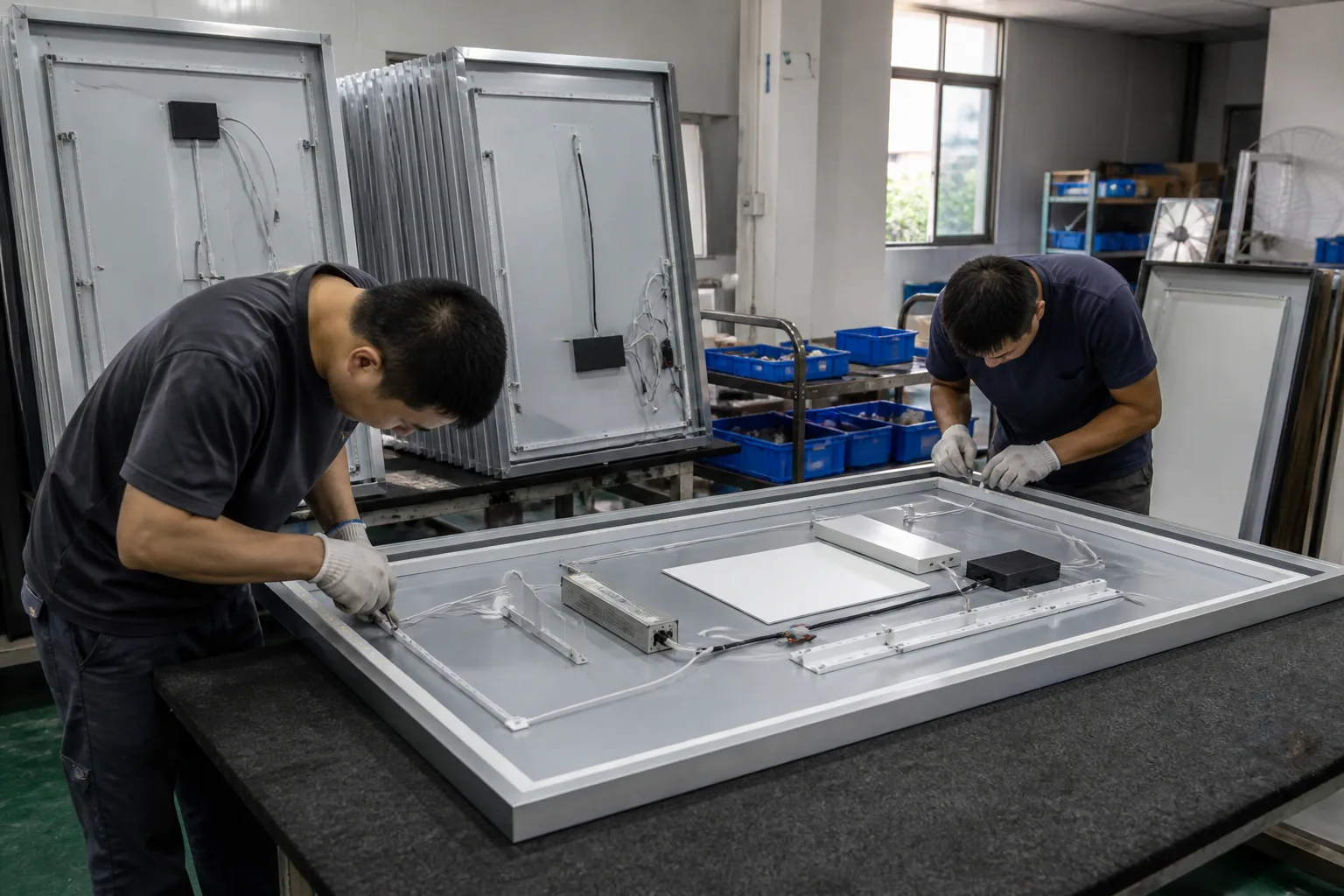
Look for a clear path from reference image to drawing, sample and order specification. Dimensions, light layout, controls, mounting, labels, instructions and packaging should remain connected to one model reference. Changes discovered during sampling should be recorded and reflected in the approved documents.
4. Review market requirements against the final model
Certification logos or general statements do not replace configuration-specific review. Ask what electrical version, component evidence, labels, instructions, test reports, declarations or third-party steps apply to the selected design and destination. Confirm the exact documentation scope during quotation and negotiation.
5. Use the sample as a buying decision tool
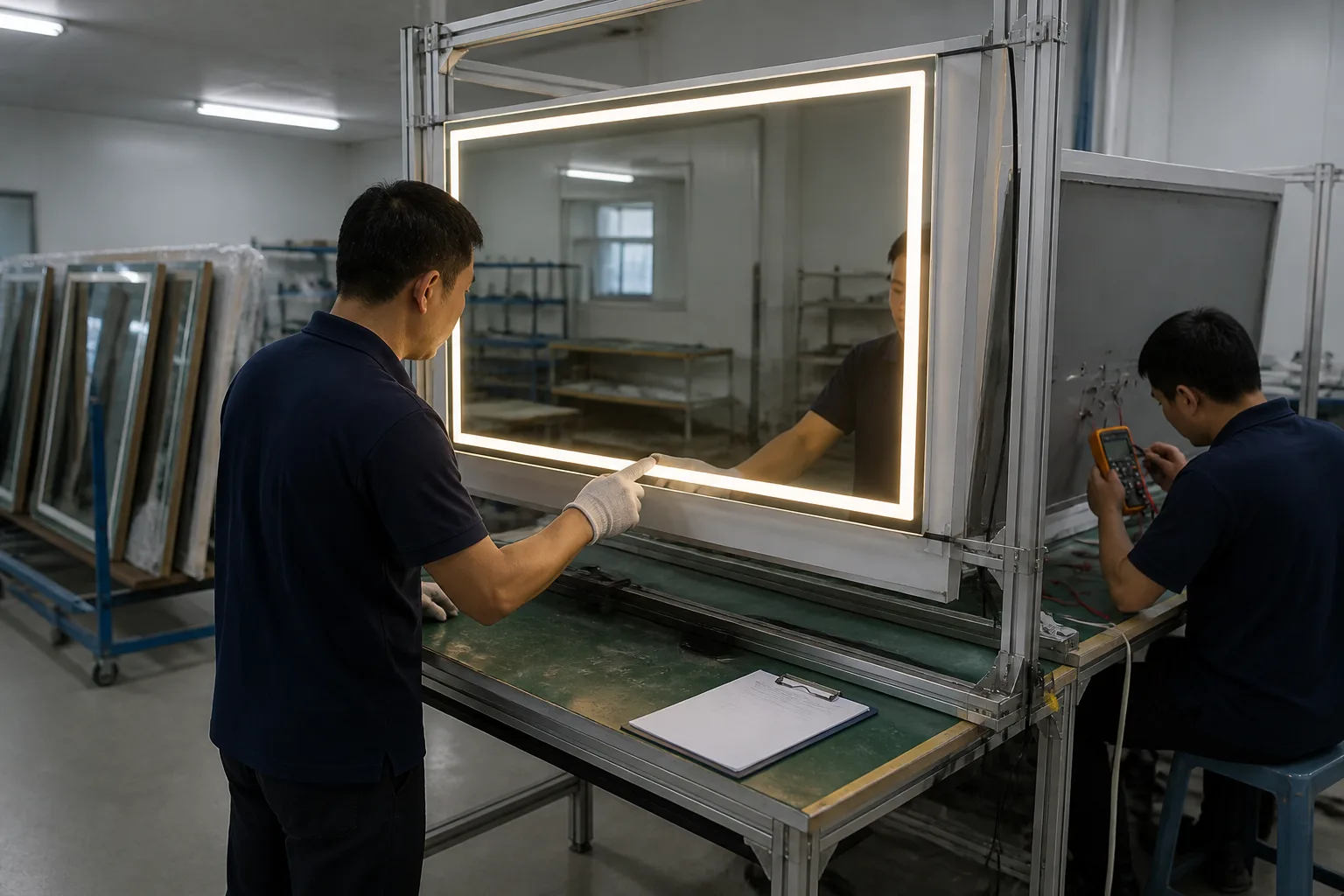
Set the sample objective before production. Review visible quality, lighting behaviour, controls, installation, labels and packaging against the agreed drawing and brief. Convert accepted changes into the final production reference rather than approving through scattered messages.
6. Compare the complete quotation scope
Compare price only after product configuration, quantity, packaging, documentation and delivery scope are aligned. Production schedule, warranty terms, inspection plan and any market-specific steps should be confirmed for that same final configuration.
- Model, drawing revision and option list
- Quantity and repeat-order assumptions
- Branding, labels, instructions and packaging
- Documentation, inspection and delivery scope
- Production schedule and warranty terms for the final order
7. Keep an evidence trail before order release
Retain the approved drawing, sample notes, component specification, labels, instructions, packaging reference and commercial agreement together. This creates a practical basis for inspection, repeat orders and future product changes.