Begin with the decision your OEM brief must support
An OEM LED mirror brief turns a visual reference into a controlled product, market and brand proposal. Jiachuang Mirror reviews shape, lighting, controls, mounting and packaging through the brief, drawing and sample stages before order confirmation. Identify whether the immediate request is feasibility, a comparable quotation, a sample or an engineering review. Name the sales channel, intended buyer and responsible reviewer. Separate decisions already approved by the brand from preferences still open to supplier proposals so the first response answers a specific buying question.
Form: record the envelope and the recognisable details
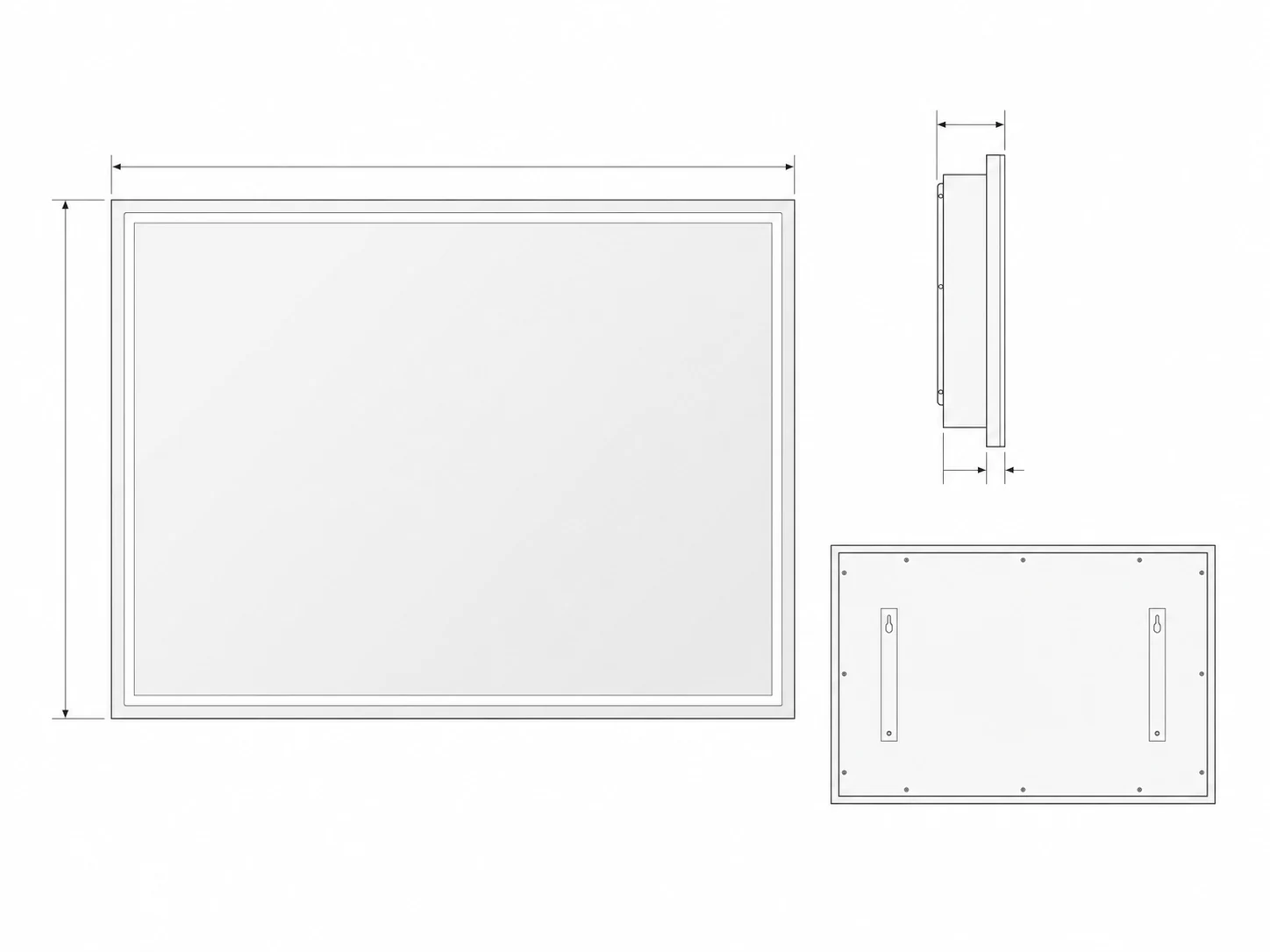
Record shape, width, height, orientation, relevant depth, frame direction, visible edge and mounting environment. Add a reference image or product link and identify which details the customer should recognise. A silhouette, frame finish or light pattern can be central to the range identity, while an internal component position may remain open for engineering review. Use one drawing number, revision and unit system. Mark dimensions as required, preferred or reference, and ask the supplier to identify conflicts rather than assuming that an image fixes the construction.
- Product or platform reference
- Overall dimensions, orientation and relevant depth
- Non-negotiable visible details
- Vanity relationship, wall condition and installation assumptions
Light and function: write the operating result
Choose front, back or dual-light intent before listing options. Front-light zones support a visible illuminated face; backlighting creates an ambient wall halo influenced by the installed wall relationship. Keep colour temperature, light output and colour rendering as separate requirements. For dimming or selectable colour temperature, record the control sequence, power-on default and memory expectations. State whether anti-fog operates with the light or independently, and mark the intended clear zone. The rear layout must reconcile that zone with controls, lighting, fixing points and electrical components for the selected model.
Market and installation: make open questions explicit
Name the destination market, planned electrical version, connection approach, power-entry location, mounting surface and service-access assumptions. Add label language and any buyer or project documentation request. Keep certification or electrical wording out of final artwork until the selected construction and market scope are confirmed. Market routes differ, and one mark or report cannot be assumed to cover every size, control or component layout. Ask the supplier to return unsupported assumptions and the technical questions that need agreement before the sample is approved.
Brand content: assign each file an owner and revision
Create a list of product labels, rating or market labels, consumer cartons, outer cartons, instructions, inserts, barcode data and any project identification. Record who supplies each item, its language or market version, the approved copy and the current revision. The brand owner should identify the barcode type and encoded value before approval. Ask for proposed print areas and production constraints against the same artwork revision. Review label placement and legibility on the physical sample; approval of a screen image alone does not confirm the printed result.
- Brand name, product name and logo source
- Label copy, instruction language and inserts
- Barcode owner, type, data and scan check
- Artwork revision, approval owner and open questions
Packaging: separate protection from presentation
State whether the range uses wholesale, parcel-based e-commerce, retail or project distribution. Review the mirror's edge, face, corner, rear-component and movement risks together with the included accessories. Carton artwork controls presentation; the packaging specification also covers the physical protection and intended handling route. Check the packed sample for accessory count, instructions, labels, barcode readability where applicable and useful carton identification. Keep the accepted packaging reference linked to the model, drawing and sample so a change to the product does not leave the pack definition behind.
Sample and commercial scope: release one agreed reference
Define the sample objective and reviewers for appearance, operation, installation and packaging. Record observations and accepted changes in one list, then update the drawing, configuration, labels and instructions together. Provide initial quantity, variants and repeat-order assumptions for the quotation. Compare suppliers against the same product, evidence, packaging and delivery scope. Price, MOQ, sample terms, production schedule, warranty and documentation are confirmed for the selected configuration in writing. The approved sample and document set then provide a reference for order inspection, repeat orders and later revisions.
| Begin with the decision your OEM brief must support | An OEM LED mirror brief turns a visual reference into a controlled product, market and brand proposal. Jiachuang Mirror reviews shape, lighting, controls, mounting and packaging through the brief, drawing and sample stages before order confirmation. Identify whether the immediate request is feasibility, a comparable quotation, a sample or an engineering review. Name the sales channel, intended buyer and responsible reviewer. Separate decisions already approved by the brand from preferences still open to supplier proposals so the first response answers a specific buying question. |
|---|---|
| Form: record the envelope and the recognisable details | Record shape, width, height, orientation, relevant depth, frame direction, visible edge and mounting environment. Add a reference image or product link and identify which details the customer should recognise. A silhouette, frame finish or light pattern can be central to the range identity, while an internal component position may remain open for engineering review. Use one drawing number, revision and unit system. Mark dimensions as required, preferred or reference, and ask the supplier to identify conflicts rather than assuming that an image fixes the construction. |
| Light and function: write the operating result | Choose front, back or dual-light intent before listing options. Front-light zones support a visible illuminated face; backlighting creates an ambient wall halo influenced by the installed wall relationship. Keep colour temperature, light output and colour rendering as separate requirements. For dimming or selectable colour temperature, record the control sequence, power-on default and memory expectations. State whether anti-fog operates with the light or independently, and mark the intended clear zone. The rear layout must reconcile that zone with controls, lighting, fixing points and electrical components for the selected model. |
| Market and installation: make open questions explicit | Name the destination market, planned electrical version, connection approach, power-entry location, mounting surface and service-access assumptions. Add label language and any buyer or project documentation request. Keep certification or electrical wording out of final artwork until the selected construction and market scope are confirmed. Market routes differ, and one mark or report cannot be assumed to cover every size, control or component layout. Ask the supplier to return unsupported assumptions and the technical questions that need agreement before the sample is approved. |
| Brand content: assign each file an owner and revision | Create a list of product labels, rating or market labels, consumer cartons, outer cartons, instructions, inserts, barcode data and any project identification. Record who supplies each item, its language or market version, the approved copy and the current revision. The brand owner should identify the barcode type and encoded value before approval. Ask for proposed print areas and production constraints against the same artwork revision. Review label placement and legibility on the physical sample; approval of a screen image alone does not confirm the printed result. |
| Packaging: separate protection from presentation | State whether the range uses wholesale, parcel-based e-commerce, retail or project distribution. Review the mirror's edge, face, corner, rear-component and movement risks together with the included accessories. Carton artwork controls presentation; the packaging specification also covers the physical protection and intended handling route. Check the packed sample for accessory count, instructions, labels, barcode readability where applicable and useful carton identification. Keep the accepted packaging reference linked to the model, drawing and sample so a change to the product does not leave the pack definition behind. |
| Sample and commercial scope: release one agreed reference | Define the sample objective and reviewers for appearance, operation, installation and packaging. Record observations and accepted changes in one list, then update the drawing, configuration, labels and instructions together. Provide initial quantity, variants and repeat-order assumptions for the quotation. Compare suppliers against the same product, evidence, packaging and delivery scope. Price, MOQ, sample terms, production schedule, warranty and documentation are confirmed for the selected configuration in writing. The approved sample and document set then provide a reference for order inspection, repeat orders and later revisions. |