
Separate colour appearance from light output and colour rendering
Correlated colour temperature (CCT) describes the apparent warmth or coolness of white light in Kelvin. It does not by itself state how much light reaches the user, how evenly the mirror is lit or how faithfully colours appear. Keep CCT, light output, distribution and colour-rendering requirements as separate lines in the buyer brief.
- CCT in Kelvin
- Front, back or dual-light role
- Light output or illuminance target where the project defines one
- Colour-rendering requirement and evidence requested for the selected configuration
Use candidate bands to start the room discussion
A 2700-3000 K direction usually reads warmer, 3500-4000 K sits in a more neutral planning range, and 5000 K or above reads cooler. These are comparison bands, not a universal rule for every bathroom. Review the mirror beside the room's ceiling, wall and vanity lighting, finishes and intended atmosphere before fixing the specification.
- Warmer direction: hospitality, residential or finish-led schemes when it matches the room concept
- Neutral direction: balanced project or retail briefs that must coordinate with other luminaires
- Cooler direction: only where the buyer's task, room concept and surrounding lighting support it
Decide between one fixed CCT and selectable CCT
A fixed-CCT mirror gives the buyer one controlled reference across a range or room schedule. A selectable-CCT mirror can support more than one appearance, but it also creates control and state questions. State whether adjustment is a buyer requirement, a user feature or only a sample-comparison tool.
- Required Kelvin setting or selectable settings
- Touch control, wall-switch sequence or other operating method
- Power-on default and memory behaviour
- Whether front and back light zones change together
- Label and instruction wording to review
Match CCT to the mirror's lighting role
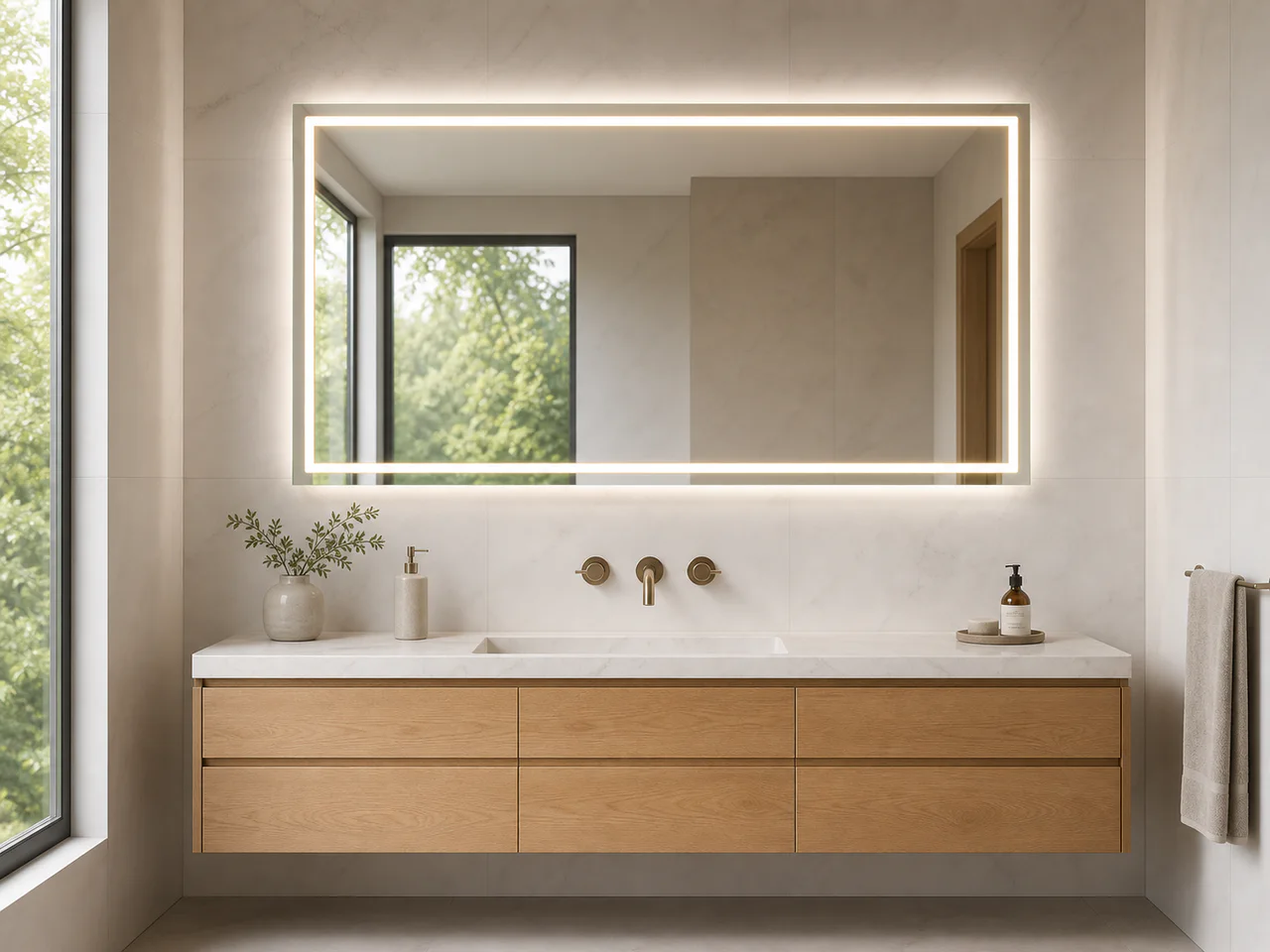
Front lighting is viewed more directly and may carry more of the face-lighting task. Backlighting primarily shapes the wall halo and atmosphere. Dual-light designs need the buyer to define which zone leads, whether the zones share one CCT and how each zone is controlled. Do not approve the Kelvin number without reviewing the light layout and installation context.
Build one comparison matrix for range or project review
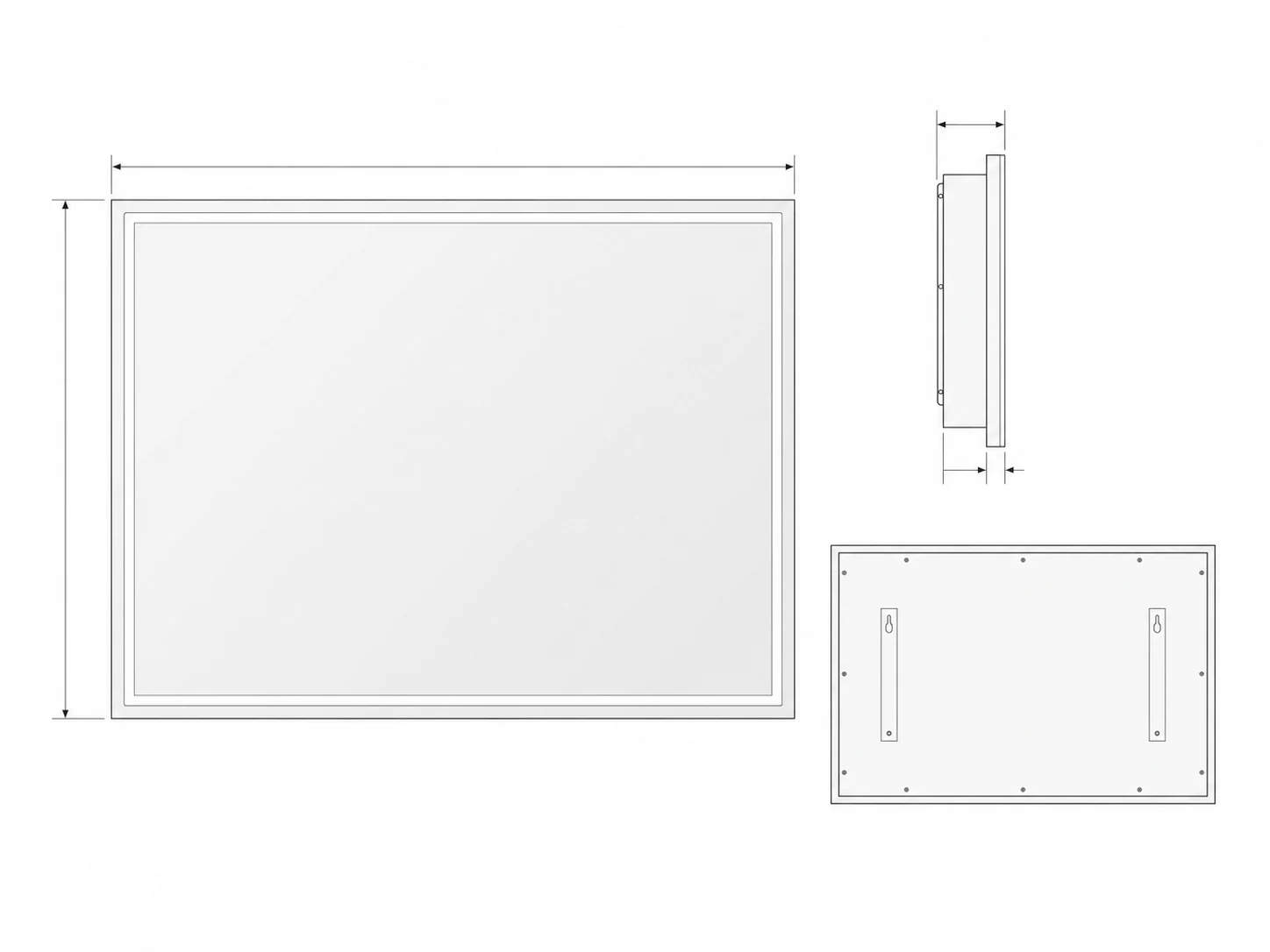
Use one line for every product, room type or candidate configuration. Record the lighting role, candidate CCT, fixed or selectable decision, surrounding-light reference, control sequence, sample status and open supplier-confirmation items. This prevents a colour-temperature preference from becoming disconnected from the drawing, sample and quotation.
Approve the selected configuration, not a generic colour label
Review the sample in a representative room-light condition and record the agreed Kelvin setting, light zones, controls and operating state against the product and drawing revision. Final component specification, electrical version, performance evidence, applicable documentation, price, MOQ, production schedule, warranty and delivery terms remain subject to selected-configuration confirmation and written quotation.